The Stakes of API Reliability in Crypto Trading
In the world of cryptocurrency trading, speed and automation are everything. For many traders and developers, APIs are the backbone that enables algorithmic strategies, bots, and efficient portfolio management. So when a major exchange quietly disables a critical part of its API—and leaves it that way for years—it raises serious questions about reliability, transparency, and developer trust.
This article explores what happened when MEXC disabled its futures trading API endpoints in July 2022, why the situation still matters today, and what developers and traders should consider before building on any exchange platform. Along the way, we’ll break down the risks of relying on unstable infrastructure and offer practical guidance for choosing better alternatives.
The goal here isn’t just to highlight one platform’s shortcomings, but to help you understand how to evaluate exchanges critically—especially if your trading strategy depends on automation.
What Happened with the MEXC API
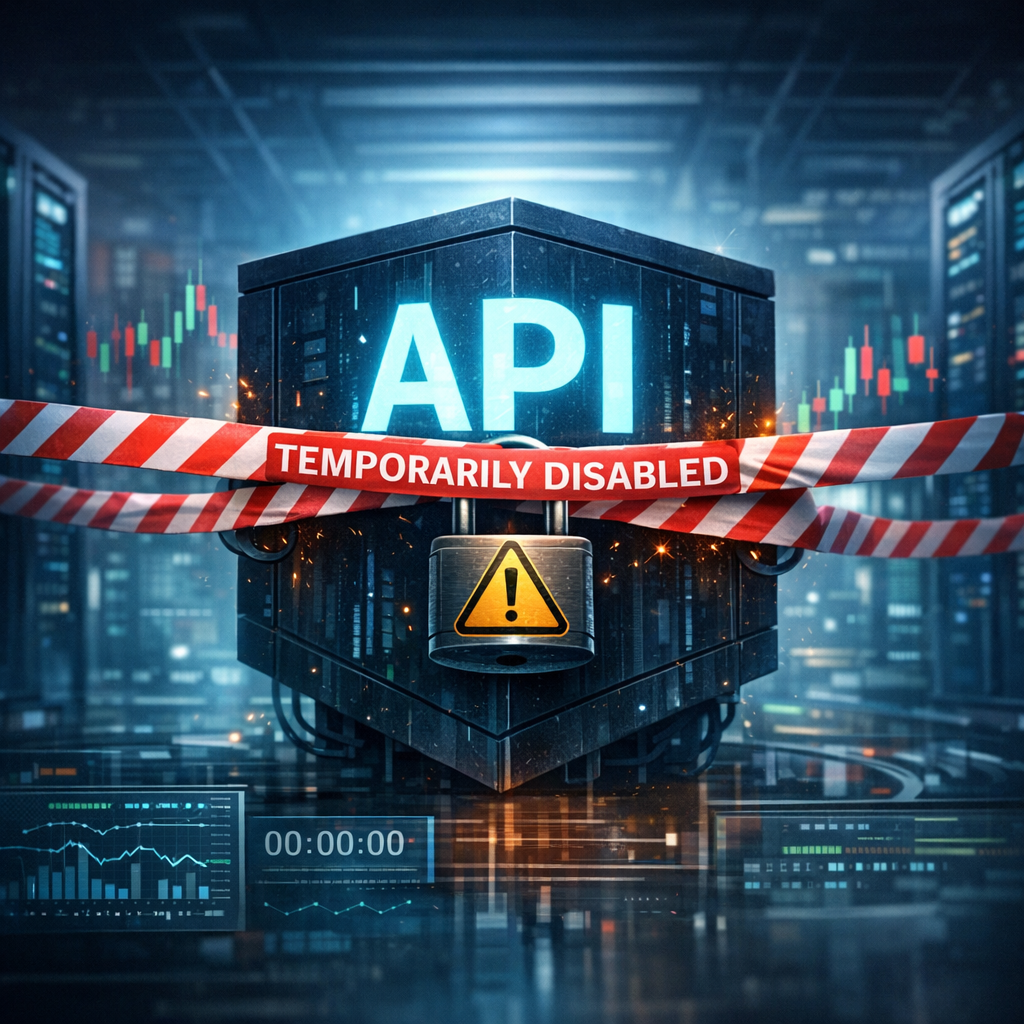
In July 2022, MEXC announced that key futures API endpoints—specifically those used to place and cancel orders—would be “temporarily” disabled. According to their official documentation, only query endpoints would remain active, meaning users could retrieve data but not execute trades programmatically.
At first glance, this might sound like a routine maintenance issue. Exchanges occasionally take systems offline to fix bugs, improve performance, or address security concerns. Typically, these interruptions last hours or, at most, a few days.
However, what makes this case unusual is the duration. Years later, those endpoints have not been meaningfully restored. The “temporary” label has stretched far beyond what most developers would consider reasonable.
This creates a fundamental disconnect: while the futures platform itself continues to operate—and even expand with new features—the API functionality required for automated trading remains limited or unusable.
Suggested visual: A timeline graphic showing July 2022 API shutdown and the lack of restoration over time would help illustrate the gap between expectation and reality.
Why API Access Is Critical for Automation
For casual traders, this might not seem like a big issue. After all, manual trading through a web or mobile interface still works. But for a large segment of the crypto ecosystem, APIs are essential.
APIs enable:
- Algorithmic trading strategies that execute trades based on predefined rules
- Arbitrage systems that exploit price differences across exchanges
- Risk management tools that automatically adjust positions
- Portfolio tracking and integration with external platforms
Without reliable order placement and cancellation endpoints, these systems simply cannot function.
Imagine trying to run a trading bot that can analyze market conditions but cannot act on them. It’s like having a self-driving car that can see the road but isn’t allowed to steer.
In practice, this limitation forces developers to either abandon the platform or resort to inefficient workarounds, such as manual intervention or unofficial tools—both of which introduce risk and reduce scalability.
Suggested visual: A simple diagram comparing “Full API Access” vs. “Read-Only API Access” could clarify the impact on trading workflows.
Growth Without Developer Support
One of the more puzzling aspects of this situation is that MEXC has continued to expand its futures offerings. New trading pairs, higher leverage options, and additional features have been introduced regularly.
This indicates that the core trading infrastructure is not fundamentally broken. The platform is active, evolving, and actively marketed to users.
Yet the API—arguably one of the most important tools for advanced users—remains in a prolonged state of limitation.
This creates a perception problem. When an exchange promotes itself as developer-friendly or API-supported, users expect consistency between marketing and reality. If critical functionality is unavailable for years, it undermines trust.
In developer communities, this kind of inconsistency tends to spread quickly. Forum discussions, GitHub issues, and support channels often reflect ongoing frustration when promised features remain inaccessible without clear timelines or updates.
Suggested visual: A side-by-side comparison of “Platform Features Growth” vs. “API Capability Status” could highlight this imbalance.
Choosing Reliable Infrastructure for Trading Systems
If you’re building trading systems, the reliability of an exchange’s API should be one of your top priorities. A platform that cannot guarantee stable access to core endpoints introduces several risks:
First, there’s operational risk. Your trading strategy may fail unexpectedly if endpoints are disabled or unstable.
Second, there’s opportunity cost. Time spent integrating with a problematic API could have been used to build on a more reliable platform.
Third, there’s scalability risk. Even if you manage to work around limitations, your system may not scale effectively as your trading volume grows.
In real-world scenarios, developers often choose exchanges based on API quality rather than trading fees or interface design. A slightly higher fee is often acceptable if it comes with dependable infrastructure.
For example, platforms like Binance, Coinbase, and Kraken have invested heavily in maintaining robust API ecosystems, complete with detailed documentation, versioning, and active developer support. While not perfect, they generally provide the stability needed for long-term projects.
If you’re evaluating where to build your trading system, here are some practical guidelines to follow:
Look for consistency in API uptime and functionality. Check whether core endpoints—like order placement—have a history of stability.
Review the documentation quality. Clear, up-to-date docs are a strong indicator of a platform that values developers.
Explore community feedback. Forums, Reddit, and developer groups often reveal issues that official channels don’t highlight.
Test before committing. Build a small prototype and monitor how the API performs under real conditions.
Check update frequency and transparency. Platforms that communicate openly about issues and timelines are generally more trustworthy.
Suggested formatting: This section could benefit from a numbered list or checklist format to improve readability.
Why Reliability Can’t Be an Afterthought
The MEXC API situation serves as a reminder that not all exchanges are equally reliable—especially when it comes to developer tools. A feature labeled “temporary” should not remain unresolved for years, particularly when it affects core functionality like order execution.
For traders and developers, the lesson is clear: don’t assume that a platform’s size or popularity guarantees technical reliability. Always verify the state of its APIs, test its capabilities, and pay attention to how it communicates with its users.
In a space as fast-moving as crypto, your infrastructure is just as important as your strategy. Choosing the wrong platform can quietly undermine everything you’re trying to build.
References and Further Reading
To deepen your understanding, consider exploring the following resources:
- Official API documentation of major exchanges like Binance, Coinbase, and Kraken
- Developer forums such as Stack Overflow and GitHub discussions
- Crypto trading communities on Reddit and Discord
- Articles on algorithmic trading infrastructure and API reliability
Staying informed and doing due diligence upfront can save you from costly setbacks later. In automated trading, the tools you rely on are just as important as the strategies you deploy.