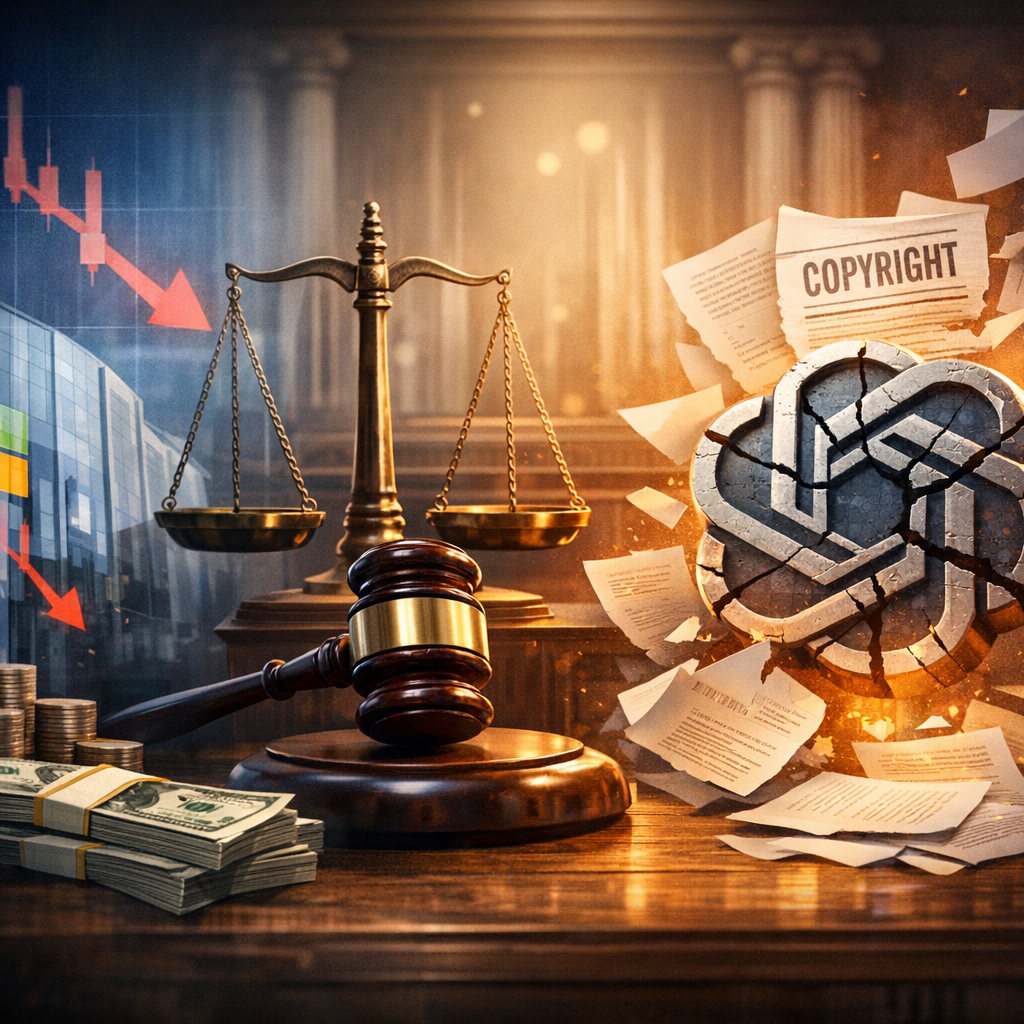
Mounting Legal Battle Over AI Training Data
The legal battle over how artificial intelligence systems are trained is entering a new and potentially explosive phase. What began as a debate over data sources has evolved into a high-stakes courtroom drama involving allegations of destroyed evidence, privileged communications, and billions of dollars in potential liability. At the center of it all is OpenAI, now facing scrutiny not just for what data it used—but for how it handled that data once legal risks became clear.
This article unpacks the core issues in this unfolding case, including why internal communications matter so much, what “willful infringement” really means, and how the outcome could reshape the AI industry. Along the way, we’ll explore the legal principles at play and what businesses, creators, and technologists can learn from this moment.
Copyright, Fair Use, and Willful Infringement
At the heart of the dispute is a fundamental question: can AI companies legally train their models on copyrighted material without permission? Plaintiffs—including authors and publishers—argue that using pirated books to train AI systems constitutes copyright infringement. OpenAI and similar companies have often countered that training models is a transformative use, potentially protected under fair use doctrine.
What raises the stakes here is the concept of “willful infringement.” Under U.S. copyright law, if a company knowingly violates copyright—or shows reckless disregard—it can be subject to enhanced damages of up to $150,000 per work infringed. Given the scale of datasets used in AI training, that number can quickly balloon into billions.
Internal communications—such as Slack messages and emails—can provide crucial evidence of intent. If those communications suggest that employees or executives were aware of legal risks and proceeded anyway, plaintiffs could argue that infringement was not accidental but deliberate.
A useful visual aid here would be a simple chart comparing standard copyright damages versus enhanced damages for willful infringement, illustrating how quickly liability can escalate when intent is proven.
Privilege, Disclosure, and the Role of Internal Communications
The current dispute centers on whether OpenAI must disclose communications between its employees and attorneys regarding the deletion of a dataset containing pirated books. Normally, such communications are protected by attorney-client privilege—a cornerstone of the legal system that allows companies to seek candid legal advice.
However, that protection is not absolute. Courts may compel disclosure under certain circumstances, particularly if there is evidence that legal advice was used to further wrongdoing or if privilege has been waived.
In this case, plaintiffs argue that the communications could reveal OpenAI’s “state of mind”—whether it knowingly used unauthorized materials and later attempted to conceal evidence. Legal experts note that this kind of insight can be devastating in court. If a judge allows these communications to be disclosed, it could set a powerful precedent for similar cases across the AI industry.
An infographic could be helpful here, showing how attorney-client privilege works, when it applies, and the exceptions that can override it.
Evidence Destruction and the Risk of Sanctions
Beyond damages, OpenAI faces another serious risk: sanctions for potential destruction of evidence. If a court finds that the company deleted data after anticipating litigation, it could interpret that as “spoliation”—the improper destruction of relevant evidence.
Sanctions for spoliation can be severe and multifaceted. They may include monetary penalties, but they often go further. For example, a judge could:
Allow the jury to assume that the deleted evidence would have been unfavorable to the company.
Limit the defenses the company can present at trial.
In extreme cases, issue a default judgment in favor of the plaintiffs.
To understand how this process typically unfolds, consider a simplified step-by-step overview of how courts evaluate potential evidence destruction:
First, the court determines whether the company had a duty to preserve evidence at the time it was deleted. This usually arises when litigation is reasonably anticipated.
Second, the court examines whether the evidence was actually destroyed and whether it was relevant to the case.
Finally, the court assesses intent—was the deletion accidental, negligent, or intentional?
This step-by-step framework would benefit from a flowchart visual to help readers grasp the decision-making process courts use.
Industry Impact and Practical Takeaways
This case is not happening in isolation. It is part of a broader wave of lawsuits targeting major AI companies over their training data practices. A notable example is the recent settlement involving Anthropic, which reportedly agreed to pay $1.5 billion to resolve similar claims from authors.
That settlement has set a benchmark—and raised expectations. Plaintiffs in other cases may now feel emboldened to pursue aggressive legal strategies, including seeking internal communications and pushing for maximum damages.
The outcome of the OpenAI case could influence how courts handle privilege disputes in future AI litigation. If judges are willing to pierce attorney-client privilege under certain conditions, companies across the tech sector may need to rethink how they document internal decision-making and legal consultations.
A timeline graphic showing key AI copyright cases and settlements would help contextualize how rapidly this area of law is evolving.
While the case involves a major AI company, the underlying lessons apply broadly to organizations navigating legal and technological change.
One key takeaway is the importance of data governance. Companies should maintain clear records of where their data comes from, what rights they have to use it, and how it is processed. This is especially critical when dealing with third-party or scraped content.
Another lesson is the need for careful communication. Internal messages—whether in email, Slack, or other platforms—can become evidence in litigation. Employees should be trained to communicate thoughtfully and avoid speculative or casual remarks about legal risks.
Legal preparedness is also essential. When litigation is anticipated, organizations must implement “litigation holds” to preserve relevant data. Failure to do so can lead to severe consequences, as seen in this case.
For creators, the case underscores the growing importance of understanding how their work is used in AI systems. Authors, artists, and publishers may increasingly seek licensing arrangements or legal protections to ensure they are compensated.
A checklist-style visual could be useful here, summarizing best practices for compliance, communication, and data management.
The dispute over OpenAI’s internal communications is about more than one company—it is a test case for how the legal system will handle the intersection of artificial intelligence, intellectual property, and corporate accountability.
If courts allow privileged communications to be disclosed and impose significant penalties, it could reshape how AI companies operate, from data collection to legal strategy. At the same time, it may empower creators and rights holders to demand greater transparency and compensation.
As AI continues to evolve, so too will the legal frameworks that govern it. For businesses, developers, and creators alike, staying informed and proactive is no longer optional—it’s essential.
References and Further Reading
Readers interested in exploring this topic further may find the following resources helpful:
Bloomberg Law coverage of the OpenAI copyright case.
U.S. Copyright Office guidance on fair use and statutory damages.
Recent reporting on the Anthropic settlement and its implications for the AI industry.
Academic commentary on AI training data and intellectual property law, including works by legal scholars such as David Schultz.
Following these developments will provide valuable insight into one of the most important legal and technological debates of our time.