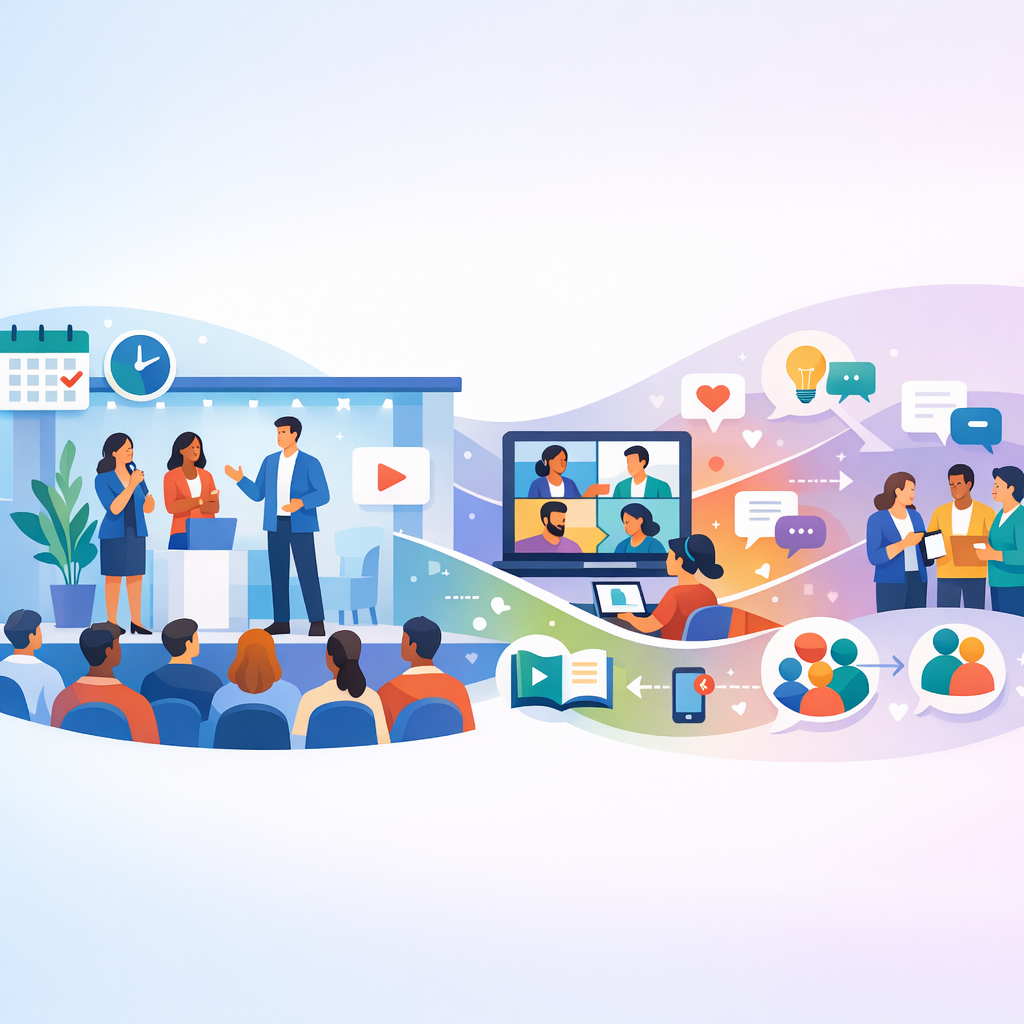
Reframing Events as Ongoing Engagement
For many associations, events are among the most visible and resource-intensive activities they deliver. Conferences, workshops, and webinars often serve as key touchpoints for member engagement, education, and revenue generation. Yet too often, the value of these events is concentrated within a narrow window of time. Once the event ends, the momentum fades, and the opportunity to deepen relationships and reinforce learning is lost. Associations that take a broader, community-driven approach can transform events from isolated experiences into ongoing engines of engagement and value.
At the heart of this shift is a simple idea: events should not stand alone. Instead, they should be embedded within a continuous cycle of interaction that includes pre-event anticipation, real-time participation, and meaningful post-event follow-up. By connecting events to a larger community strategy, associations can extend their impact, strengthen member loyalty, and create a more dynamic and responsive ecosystem.
Maximizing Impact Through Thoughtful Follow-Up
One of the most effective ways to extend event value is through thoughtful follow-up. Rather than sending a generic “thank you for attending” email, associations can design follow-up communications that reinforce key insights and encourage continued engagement. For example, a professional association hosting an annual leadership conference might send attendees a curated summary of key takeaways, along with links to session recordings and suggested next steps. This helps participants revisit what they learned and apply it in their daily work.
Follow-up can also be personalized. If attendees selected specific tracks or sessions, associations can tailor post-event content based on those interests. This level of relevance not only increases the likelihood that members will engage with the material but also demonstrates that the organization understands and values their individual needs. Over time, this builds trust and positions the association as a reliable partner in members’ professional development.
Extending Reach with Content and Learning Hubs
Content sharing plays an equally important role in extending event value. Events generate a wealth of material, from keynote presentations and panel discussions to audience questions and informal networking insights. Capturing and repurposing this content allows associations to reach a wider audience and keep the conversation alive long after the event concludes.
For instance, a healthcare association might record expert panels during a conference and later release them as a podcast series or video library. Short clips can be shared on social media to spark interest and drive traffic back to the full content. Blog posts summarizing key discussions can provide accessible entry points for members who could not attend. By distributing content across multiple channels, associations not only maximize the return on their event investment but also create ongoing touchpoints that keep members engaged.
Real-world examples show how powerful this approach can be. A technology association that hosts an annual summit might create a “year-round learning hub” where all event content is stored and continuously updated. Members can revisit sessions, participate in related discussions, and access new resources that build on the original topics. This transforms the event from a one-time experience into a sustained learning journey.
Fostering Ongoing Conversations and Community Insight
Ongoing discussions are another critical component of a community-centered strategy. Events often spark ideas, debates, and connections, but without a structured way to continue those conversations, much of that energy dissipates. Associations can address this by creating dedicated spaces for dialogue, such as online forums, member communities, or social media groups.
For example, after a policy-focused conference, an association might host a series of moderated discussions in its online community platform. Members can share how they are implementing new regulations, ask questions, and exchange best practices. Facilitators or subject matter experts can guide the conversation, ensuring it remains productive and informative. This not only reinforces the learning from the event but also fosters a sense of belonging and collaboration among members.
These ongoing discussions can also inform future programming. By monitoring the topics that generate the most interest or confusion, associations gain valuable insights into their members’ needs. This feedback loop enables them to design more relevant events, create targeted resources, and stay ahead of emerging trends within their field.
Empowering Participation and Sustaining Engagement
Another important aspect of integrating events into a broader community strategy is encouraging member-generated content and participation. When attendees are invited to share their own perspectives, experiences, and takeaways, the event becomes more than a one-way delivery of information. It evolves into a shared experience that reflects the diversity and expertise of the community.
Associations can facilitate this by prompting attendees to post reflections, host peer-led discussions, or contribute articles based on what they learned. Highlighting these contributions in newsletters or on the association’s website not only amplifies member voices but also strengthens the sense of community ownership. Members are more likely to stay engaged when they feel they are active participants rather than passive recipients.
Technology plays a crucial role in enabling these strategies, but it is not the sole solution. While platforms for content management, community engagement, and communication are essential, the real value comes from how they are used. Associations must be intentional in designing experiences that connect events to ongoing activities and interactions. This requires coordination across teams, from event planning and marketing to membership and education.
It is also important to maintain consistency. A single follow-up email or discussion thread is unlikely to sustain engagement on its own. Instead, associations should think in terms of a continuous rhythm of communication and interaction. Regular updates, new content releases, and scheduled discussions help keep the community active and ensure that events remain a central, but not isolated, part of the overall strategy.
Ultimately, extending the value of events is about shifting perspective. Rather than viewing events as endpoints, associations can see them as catalysts for ongoing engagement. By integrating follow-ups, content sharing, and continuous discussions into a cohesive community strategy, they can create richer experiences that deliver lasting value.
This approach not only benefits members by providing continuous learning and connection opportunities but also strengthens the association itself. Increased engagement leads to higher retention, deeper relationships, and a more vibrant community. In a landscape where members have many विकल्पs for information and networking, associations that successfully extend the life of their events will stand out as indispensable partners in their members’ professional journeys.